Agentic Company Orchestration
QuantaLumin is building software for running organisations with a tighter operational fabric: tickets, ownership, routing, memory, workflows, and AI agents all coordinated inside one system rather than spread across disconnected tools.
Core Problems
- Work gets lost when requests are scattered across chats, inboxes, and undocumented habits.
- AI agents are only useful if they have ownership, memory, and operational boundaries.
- Human teams need visibility into what is happening without drowning in noise.
The Platform Direction
We are interested in software that lets a company behave more like a well-run system:
- clear queues and ownership
- ticket-based coordination
- explicit handoffs
- durable memory
- operational observability
- collaboration between humans and agents
Operating Model
Agentic Company Orchestration is not about placing a chatbot on top of existing chaos. The useful unit is the company itself: a structured system with roles, queues, memory, approvals, and shared services. A customer request, platform alert, internal task, or website helpdesk issue should enter the same operational fabric and become a tracked piece of work with a clear owner.
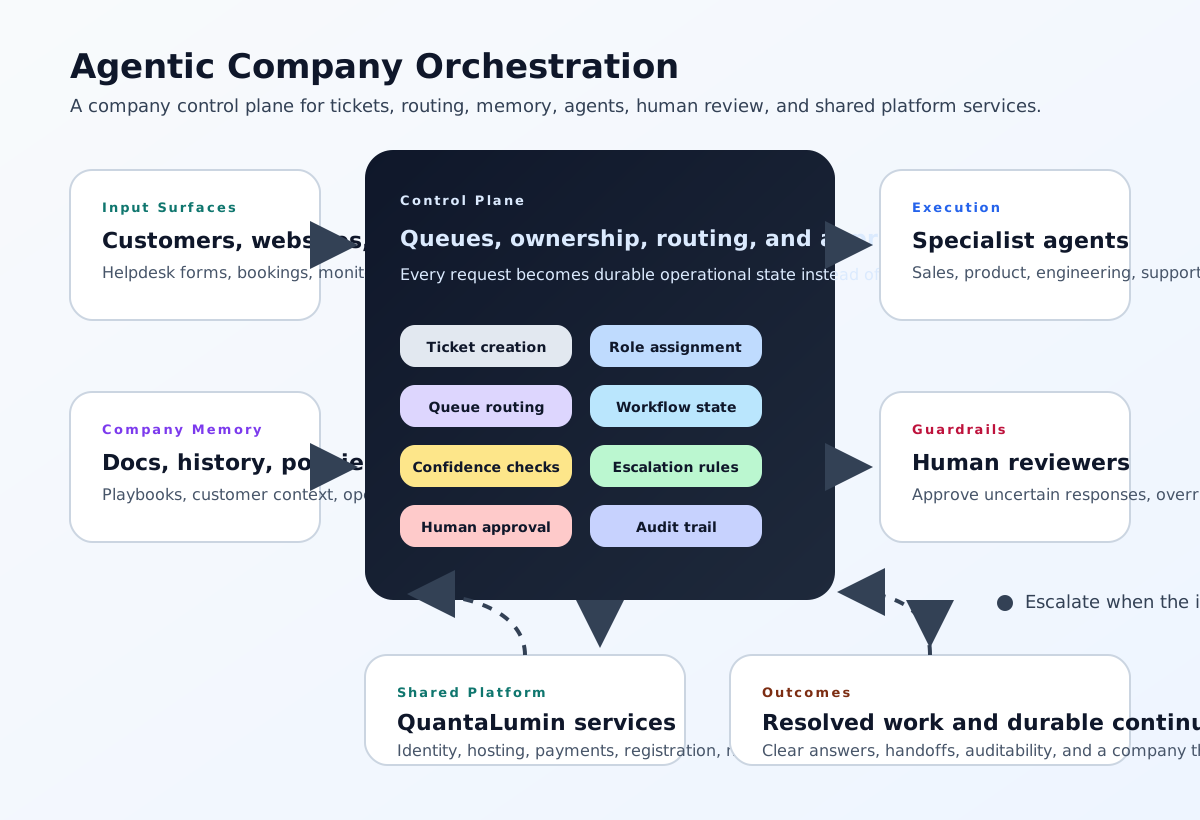
The orchestration layer ties together several practical responsibilities:
- websites, apps, and helpdesks act as intake surfaces for requests and signals
- a control plane converts those signals into tickets, queues, and handoffs
- company memory and documentation give agents operational context rather than only prompts
- specialist agents carry out bounded work inside defined roles
- human reviewers approve or redirect responses when confidence is low or policy requires it
- shared QuantaLumin services handle cross-company concerns such as hosting, payments, identity, and platform operations
How Work Moves
In a well-run agentic company, work follows a disciplined route rather than being improvised each time:
- A request arrives from a customer, a website workflow, a monitoring system, or a staff member.
- The system classifies the request, opens a ticket, attaches relevant documentation, and assigns an initial owner.
- The assigned agent or human operator works within a clearly defined service boundary.
- If the task touches another discipline, the system performs an explicit handoff rather than relying on hidden chat context.
- If the assigned agent is uncertain, low-confidence, or operating under a guarded policy, the response is reviewed by a human inside the company.
- If the issue is really a shared platform concern, it is escalated into QuantaLumin’s platform team rather than trapped inside the local website or company.
Why Tickets Matter
Tickets are not just a support feature. They are the durable unit of operational memory. A ticket preserves the request, owner, routing history, approvals, attachments, and eventual resolution. That lets a mixed human-and-agent company continue functioning across shifts, handoffs, and repeated requests without losing the thread.
What The Software Needs To Provide
For this model to work at company scale, the software has to do more than generate replies. It has to provide:
- durable ticket state
- role-aware agent assignment
- company-specific documentation and memory
- escalation rules and human-review gates
- observability over queues, ownership, and delivery outcomes
- shared service integration across websites, payments, registration, and operations
Why This Matters
Agentic systems should not just generate text. They should be able to participate in real operations without creating confusion. That requires software for governance, continuity, and practical day-to-day execution.